
Homeschooling a child with special needs or learning differences presents a unique set of challenges. My friend Shawna Wingert brings personal experience and professional expertise to this conversation. Whether you’re looking for personal encouragement and practical tips for homeschooling your own unique learner, or whether you want to grow in love and understanding for your friends who are facing these unique challenges, this is a Homeschool Conversation you will be sure to return to again and again!
Watch the video, read the show notes, and share with your friends!
Prefer to listen to your content? Subscribe to Homeschool Conversations on Apple podcasts or wherever you get your podcasts so you don’t miss a single episode!

{This post contains paid links. Please see disclaimer.}
Who is Shawna Wingert?
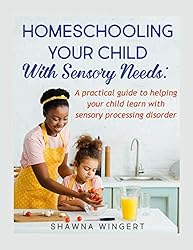
Shawna Wingert is a special education teacher turned writer, speaker and consultant. She is also a homeschooling mom of two brilliant boys with differences and special needs. Shawna has written four books for parents of special needs – Everyday Autism, Special Education at Home, Parenting Chaos, and, her latest, Homeschooling Your Child With Special Needs. She has also been featured in special needs discussions on Today.com, The Mighty, Simple Homeschool, The Huffington Post and with Autism Speaks. You can find Shawna Wingert online at DifferentByDesignLearning.com and in person, as a featured speaker at Great Homeschool Conventions.

Watch my interview with Shawna Wingert
Show Notes {with video time stamps}
Shawna’s background and her family’s decision to homeschool {1:30}
Shawna Wingert is a mom of 2 boys, currently age 17 and 14. Both of her sons have chronic illnesses, learning differences, and special needs. There have been many adjustments to their homeschool over the past 10 years!
In God’s providence, Shawna was uniquely prepared for this role even before she had children. She had training as a special needs educator and spent some time working in the classroom. She found, however, that it was hard to see all the needs in the classroom without being able to offer individualized attention and help.
She moved into corporate training and development (helping adults learn how to learn!) before moving into her role as a homeschool mom.
The Wingert family lives in southern California where her husband is a voice actor.

Why homeschool a child with special needs?{3:36}
Shawna’s family made the decision to homeschool before they had specific diagnoses for their sons. They were noticing what they now know to be extreme sensory issues and daily function challenges with her oldest son that were causing struggles in the school environment.
Shawna described an example of his struggle:
“He was able to hear all 32 pencils scratching on the paper at one time when he was sitting in the classroom trying to learn. He still talks about the smell of bleach when he would go into the cafeteria…the smell made it impossible for him to eat when he was in school.”
School refusal and daily battles became huge struggles for their family.
Her oldest son is on the autism spectrum, so although he was having such huge challenges, he was succeeding academically in school. He was in the 99th percentile in everything. “But he was white-knuckling in order to get there, and he was miserable every single day,” Shawna said.

By the end of 2nd grade, they decided to give homeschooling a try. This was at the same time his younger brother would be starting kindergarten. They were already noticing some significant reading delay issues with Shawna’s younger son, and so she decided to try homeschooling with them both.
“Homeschooling really has become and continues to be part of our overall, for lack of a better word, treatment plan for my kids. It’s part of how we are helping them be the very best version of whomever it is they’re going to be in this world. It’s helping them cope with and embrace some of the struggles and differences that they have. And … it’s giving us an opportunity to educate them. It’s all of those things,” observed Shawna.
It’s more than just helping their children with academics. It’s so much bigger than that.
Shawna explained that “the biggest benefit has been being able to protect their confidence… not having them in an environment where their differences are what defines them.”
Therapies and Services: what are your options when you homeschool a child with special needs? {10:30}
“It really is dependent on the state and the specific school district as to what the details of the answer are,” said Shawna.
She noted that it is legal and appropriate in all 50 states to homeschool a child with special needs, which seems to be a common question moms have. Accommodations are also in place in most (if not all) states for children with special needs to request an IEP and obtain services through the local public school system.
“What I will say is, and the caveat of that is, it is hard to walk that line,” observed Shawna. She said that it can be hard to move back and forth into an environment that doesn’t appreciate the homeschool mindset.

Using insurance, and accessing therapies that way, can many times be a better option for families. That option has given the Wingert family the greatest balance of being able to access therapies while also maintaining their homeschool approach.
Homeschooling in the midst of severe, long-term reading delays {15:40}
Shawna’s youngest son is profoundly dyslexic and dysgraphic. This is something that runs in Shawna’s family. Her father, for example, could barely write and sign a birthday card.
“It took me probably from the time he was 4 or 5 … up until he was about 8 or 9… to even grasp how different his brain is in terms of accessing information,” Shawna explained.

For example, her son struggled for years to differentiate between a capital I and a capital H. “It never connected” for him. One day Shawna finally realized that he was seeing the letters in 3D, as if she had set a chair on its side and told him it was not a chair anymore.
“I realized this isn’t about ability. It’s not that he can’t understand or can’t gain access to this information. It’s that I’m not teaching it in the way that he’s able to process it.”
They began doing everything 3-dimensionally and in hands-on ways to help him understand the differences between the letters.
A big change that has helped bring growth over the past few years? “We stopped doing the things that weren’t working,” Shawna said, instead of just doing more of the things that weren’t sticking.
Shawna shared so many wonderful, practical, and encouraging tips during this portion of our conversation! Make sure you listen to the video interview in its entirety so you don’t miss anything.
Strength-Based Education {25:41}
Shawna’s previous experience in corporate training and development taught her something important about strength-based education. She once did an intensive with the Gallup organization as they were rolling out their StrengthsFinders program.
During that training, Shawna was exposed to a case study comparing results between an education that focused on a student’s strengths -v- an education focusing on their weaknesses.
In a remedial approach, which is the traditional school approach, you focus on a student’s area of weakness. If you take this approach, you see an improvement in the area of weakness. For example, a student may move from a D in math to a C.

In a strength-based approach, you instead focus on the student’s area of strength. That student who was failing in math? You allow the child to devote themselves to the areas in which they excel. Whenever possible, you also use the area of strength to teach the area of weakness. In this approach, you won’t see improvement as quickly. But you will see exponential growth in the child’s performance overall. Strength-based learning dramatically outperforms the remedial approach. For example, the D math student might move up to a B, and their strong 6th grade level in Language Arts might now be up to college level.
“When you have a learner leaning into their natural giftings — what they are naturally equipped to do, what they are naturally interested in — they then not only start to feel a sense of confidence…and apply that to the areas that are tough, but they also learn how they learn. They start to create their own paradigm for how they approach something new,” Shawna encouraged.
Shawna says that practically-speaking in their homeschool this means that they spend about 80% of their time on the things her kids are naturally strong in, and only about 20% of the time on strength-based instruction in their areas of struggle.
What do you wish other homeschool parents understood about what it’s like to homeschool a child with learning challenges? {37:02}
It can be hard for those of us who aren’t experiencing these same challenges to really understand the unique kind of difficult families homeschooling special need students are facing. It’s not that we aren’t also experiencing challenges. They are just different.
There aren’t as many resources for those families homeschooling with special needs, and that can be especially hard.
Sometimes social and emotional struggles can come across as behavioral, defiance, or a lack of control. Sometimes other families think they need to shield their children from these issues.
Shawna shared a different perspective: “This is the world that we live in, homeschool or not. There are folks who have brain differences that provide a ton of value in other ways that might make it ok to put up with some attention issues or some craziness at the park when you’re doing your co-op or whatever it may be.”
Shawna also shared an absolutely beautiful story about a kind homeschool family that demonstrated selfless, compassionate, we’re-on-your-side kind of love to Shawna and her boys. You won’t want to miss this story in the video! (You just may want to have tissues nearby.)
Shawna also reminded us that our friend who is homeschooling children with differences? Don’t be upset or offended if they don’t come to all the things or don’t reply right away to your email or text. Don’t take it personally. Just keep being there for them and inviting them and letting them know you love them.


Personalized parent support for families with learning differences {44:20}
Shawna provides individualized, strength-based learning plans for children. She provides online, strength-based tutoring support. She also is able to share her experience and support by providing coaching directly with parents. You can find out all about her Different by Design Parent Support here.
Find Shawna Wingert Online
- Different by Design Learning
- Facebook Group (this group is very carefully managed to maintain an honest, supportive environment)
- Email Newsletter (this is one of the emails I always open)
Check out all the other interviews in my Homeschool Conversations series!